Quick Answer How Much Does It Cost to Maintain a Car in Nigeria? In 2026, the cost to maintain a car in Nigeria ranges from approximately ₦70,000 to ₦300,000+ monthly, depending on the vehicle ...
28May

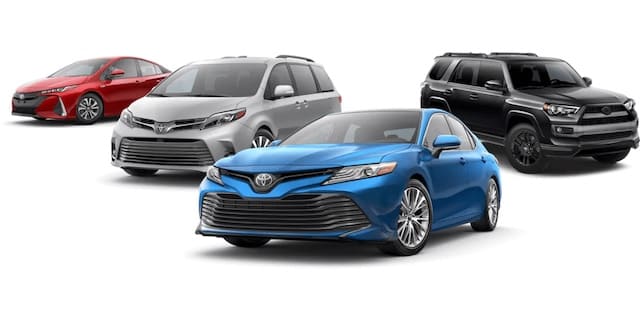
Quick Answer: The best fuel-efficient cars for Nigerian roads in 2026 include the Toyota Corolla, Honda Civic, Toyota Yaris, Kia Rio, Hyundai Accent, Honda Fit/Jazz, Toyota Prius, Honda Insight, Toyota Camry, Toyota RAV4, and Honda CR-V. These models provide the best low fuel consumption, affordable maintenance, and durability needed for Nigerian roads and traffic conditions.
Rising petrol costs have transformed car ownership in Nigeria into a financial survival game. In 2026, choosing from the top fuel-efficient cars for Nigerian roads is no longer optional—it is one of the smartest ways to cut monthly transport costs. With petrol prices frequently hovering above ₦1,200 per litre in major cities like Lagos and Abuja, the stakes have never been higher for daily commuters.
A vehicle that guzzles fuel today is like a bucket with a hole in the bottom—it doesn’t matter how much income you pour in, you will always find yourself running on empty. Building on our previous blueprint for the 10 Cheapest Cars to Maintain in Nigeria (2026 Buyer Guide), we are now pivoting to the “petrol misers”—the specific models that treat every drop of fuel like liquid gold.
If you are hunting for highly efficient vehicles to protect your wallet from the daily hemorrhage of cash, this comprehensive breakdown outlines the best low fuel consumption cars in Nigeria for every budget.
| Vehicle Model | Fuel Economy | Engine Capacity | 2026 Fiscal Policy Status | Best Suited For |
|---|---|---|---|---|
| Toyota Corolla | 12 – 15 km/L | 1.8L | Fully Exempt (Under 2.0L) | Daily city commuting & easy repairs |
| Honda Civic | 12 – 14 km/L | 1.8L | Fully Exempt (Under 2.0L) | Sporty handling with fuel economy |
| Toyota Yaris | 13 – 16 km/L | 1.5L | Fully Exempt (Under 2.0L) | Navigating tight city traffic |
| Kia Rio | 14 – 16 km/L | 1.4L | Fully Exempt (Under 2.0L) | Ride-hailing drivers & low overhead |
| Hyundai Accent | 13 – 15 km/L | 1.6L | Fully Exempt (Under 2.0L) | Modern cabin tech on a budget |
When shopping in the Nigerian used car market (Tokunbo or locally used), matching your fuel goals with your actual purchasing power is essential.
Best Options:
Honda Fit, Toyota Yaris, Kia Rio
Primary Value Proposition:
Lowest cost of entry, small engine footprints, ideal for single commuters or ride-hailing setups.
Best Options:
Toyota Corolla, Honda Civic, Hyundai Accent
Primary Value Proposition:
The sweet spot for long-term durability, family practicality, and massive spare parts availability.
Best Options:
Toyota Prius, Toyota Camry, Toyota RAV4, Honda CR-V
Primary Value Proposition:
Advanced hybrid fuel savings, executive passenger room, or high ground clearance for rough terrain.
| Driver Need | Best Pick |
|---|---|
| Cheapest to run | Honda Fit |
| Best overall | Toyota Corolla |
| Best for traffic | Toyota Prius |
| Best for Uber/Bolt | Kia Rio |
| Best SUV | Toyota RAV4 |
| Best for families | Honda CR-V |
If your daily life is a battle against the grueling “go-slow” of Third Mainland Bridge or the endless traffic snarls of Wuse II, a 4-cylinder vehicle under 2.0L is your best economic weapon. These budget-friendly commuter cars keep you entirely below the environmental engine surcharge radar.
For most Nigerian drivers, the Corolla remains the undisputed king of resale value and fuel thrift in the country. Because its 1.8L engine beats comfortably below the 2,000cc threshold, it completely evades the new environmental fiscal import levies targeted at larger engine displacements.
The Details: Whether you are driving the highly popular 2010 Corolla (locally nicknamed “Muscle”) or a modern 2024 model, you can expect a disciplined 12km to 15km per litre. It is widely considered an excellent choice for local driving due to its simple mechanical setup and the absolute abundance of roadside spare parts.
Honda’s i-VTEC technology is engineered to optimize valve timing, meaning it knows exactly when to conserve energy and when to deliver power.
The Details: The 2012–2015 “Rebirth” generation and its successors are fantastic options for anyone tracking top fuel-efficient cars for Nigerian roads.
By pressing the dashboard’s “ECON” mode button, the vehicle automatically softens throttle response and optimizes the air conditioning to stretch your fuel tank further. It offers a slightly more premium, sporty drive compared to the Corolla without sacrificing your savings at the pump.
For drivers who want Toyota reliability but need an even smaller fuel footprint than the Corolla, the Yaris is an exceptional choice.
The Details: Its compact 1.5-litre engine makes it a master at navigating tight urban environments, returning an impressive 13km to 16km per litre.
Because it is lightweight, it reaches cruising speeds quickly with minimal throttle input, making it a favorite for point-to-point city errands.
The Kia Rio has quietly become a staple of the modern transport economy. By deploying an ultra-small displacement engine, it gives you a modern cabin layout while keeping your operational overhead low.
The Details: Boasting a tiny 1.4L engine footprint, the Rio can reach up to 16km per litre on a clear highway.
For ride-hailing drivers or small business owners tracking daily overhead costs, this model represents one of the most practical options for maintaining profitability.
Sharing structural DNA with its Kia sibling, the Hyundai Accent offers sleek styling and intuitive interior technology without forcing you to pay the steep secondary market premium often attached to used Toyotas.
The Details: The Accent delivers a highly competitive 13km to 15km per litre on mixed city and highway routes.
It is a highly capable vehicle for small families who want a smooth, modern ride while protecting their budget from high filling station costs.
Do not let the subcompact exterior fool you; the Honda Fit is a masterclass in spatial engineering and fuel economy.
The Details: It delivers an incredible 14km to 17km per litre, making it one of the most economical cars for Nigerian drivers.
Thanks to its famous “Magic Seats” configuration, the rear seats fold completely flat or flip upward, allowing you to haul surprisingly large cargo loads that would struggle to fit into a standard mid-size sedan.
With fuel costs redefining consumer habits, hybrid vehicles have officially transitioned from a niche premium preference into a mainstream necessity. By pairing a small petrol engine with a self-charging electric battery system, hybrids are uniquely optimized for the stop-and-go pattern of Nigerian city traffic.
Once looked down upon for its unconventional shape, the Toyota Prius is now highly coveted in the Nigerian secondary market.
The Details: The Prius delivers an astonishing 20km to 24km per litre. In bumper-to-bumper traffic, the petrol engine shuts off completely, allowing you to crawl forward on pure electric power.
It ranks among the best fuel-saving vehicles for Nigerian drivers. Furthermore, as an eco-friendly hybrid, it is fully exempt from incoming engine-capacity customs surcharges.
The Insight is Honda’s response to the hybrid demand, utilizing their Integrated Motor Assist (IMA) setup to offer an exceptionally economical drive.
The Details: Yielding roughly 18km to 22km per litre, the Insight provides an incredibly smooth ride for urban commutes.
It is generally more affordable to purchase upfront as a Tokunbo (foreign-used) option compared to the Prius, making it a stellar entry point into hybrid ownership.
You do not have to drive a massive, fuel-guzzling V8 engine just to survive the heavy “gallops” (potholes) and seasonal flash floods that characterize our road networks. When looking for capable models that balance space with sensible consumption, these selections utilize larger 4-cylinder layouts.
While buyers should factor in the environmental surcharge framework applied to port imports over 2,000cc (2.0L), the long-term pump savings easily outweigh the upfront clearing hurdle.
For buyers who need a spacious mid-size sedan with plenty of rear legroom and a commanding highway presence, the 4-cylinder Camry is a reliable alternative to small subcompacts.
The Details: Avoid the thirsty V6 models and opt for the 2.4L engine—found on the highly popular 2007–2011 Camry generation (often nicknamed “Muscle” in Nigeria)—or the later 2.5L versions.
These four-cylinder versions deliver a respectable 10km to 13km per litre, giving you an executive cabin feel without truck-like running costs.
When assessing top fuel-efficient cars for Nigerian roads in the crossover segment, the RAV4 provides the high ground clearance required for rough Nigerian terrains while keeping a modest fuel appetite.
The Details: It delivers a highly respectable 10km to 12km per litre, a major financial relief for a car that can confidently handle a flooded street or a rough dirt track. It proves that you can enjoy the utility of a crossover while staying firmly within the bracket of the most practical vehicles for the local climate.
The Honda CR-V balances cabin luxury, passenger safety, and sensible fuel consumption without breaking a sweat.
The Details: The CR-V utilizes an intelligent “Real-Time 4WD” system. Instead of spinning all four wheels constantly, it stays in a highly efficient front-wheel-drive mode, only engaging the rear wheels when it detects a slip or a muddy road. It stands tall as one of the most economical SUVs in Nigeria, refusing to drink fuel like a conventional truck.
Before you finalize the purchase of any foreign-used vehicle, ensure you perform a professional pre-purchase inspection. A massive issue in the Nigerian used car market is the unauthorized removal of the catalytic converter (locally called the “indomie”), which dishonest handlers cut out of the exhaust system to sell the valuable precious metals inside.
Without a functional catalytic converter, it can disrupt the engine’s fuel-air calculations and reduce efficiency. This mechanical defect will cause even a highly efficient 1.4L engine to burn through fuel like a heavy SUV.
To protect yourself, read our guide on Common Mistakes First-Time Car Buyers Make: A 2026 Nigerian Survival Guide and always ensure you Verify Car Documents Before Buying to ensure the vehicle has been cleared legally at the ports.
The actual running cost of a car isn’t reflected in its initial purchase price; it is hidden in the “daily subscription fee” you pay at the filling station. Prioritizing low fuel consumption cars is the equivalent of giving your household a monthly pay raise.
While calculating the total operational overhead via our How Much Does It Cost to Maintain a Car in Nigeria? (2026 Budget Guide) ensures your long-term finances stay predictable, prioritizing low engine displacement keeps your daily operational costs low.
An economical car holds its secondary resale market value incredibly well in today’s economy because every buyer is actively searching for a way to move from point A to point B without emptying their bank account.
Navigating the current economic landscape requires a vehicle that understands the real-world value of a Naira. Leaving the era of high-consumption luxury behind isn’t a downgrade—it is a smart, strategic repositioning.
From the everyday reliability of the Corolla to the traffic-defying engineering of the Prius, investing in an economical vehicle that respects your fuel budget guarantees that you keep your hard-earned money where it belongs: in your pocket. Choose your next ride based on your daily route, protect yourself from the Tokunbo exhaust scams, and take control of your monthly transport overhead.
A. The Toyota Prius is widely regarded as one of the absolute best options for saving fuel, achieving an exceptional 20km to 24km per litre. Its hybrid system allows it to run entirely on battery power during heavy traffic jams, saving immense amounts of fuel.
A. Yes. With petrol prices staying high, the fuel savings of a hybrid car are significant, particularly for those commuting daily in traffic-heavy cities like Lagos, Port Harcourt, and Abuja. However, ensure you have a certified technician check the hybrid battery health using a diagnostic scanner before buying.
A. When shopping for top fuel-efficient cars for Nigerian roads in the sports utility category, the Toyota RAV4 and Honda CR-V (4-cylinder models) offer the best balance of fuel economy, high ground clearance, and rugged performance needed to navigate local potholes and seasonal flooding.
A. Yes. Removing the catalytic converter (the “indomie”) causes the vehicle’s oxygen sensors to send incorrect readings to the engine computer. This typically triggers a “Check Engine” light and leads to a significant increase in fuel consumption.