Quick Answer: To verify car documents before buying in Nigeria, check the Proof of Ownership, Vehicle License, Plate Allocation (MVA 1), Roadworthiness Certificate, CMRIS report, and Customs SGD ...
28May

How Much Does It Cost to Maintain a Car in Nigeria? In 2026, the cost to maintain a car in Nigeria ranges from approximately ₦70,000 to ₦300,000+ monthly, depending on the vehicle type, fuel consumption, servicing needs, and annual paperwork. Small cars like the Toyota Yaris cost less to maintain, while SUVs and V6 engines require significantly higher fuel and repair budgets.
To buy a car in Nigeria is one thing, but keeping it on the asphalt without crying every month is another ball game entirely. Before you even make that financial commitment, you need to ask yourself: how much does it cost to maintain a car in Nigeria?
If you don’t calculate your maintenance budget beforehand, that fancy ride will easily turn into a mechanical subscription service—quietly draining your monthly income. With fuel prices continuing to climb across Lagos, Abuja, and Kano, you simply cannot afford to skip the math.
To stay ahead of these rising expenses and keep your wheels turning smoothly, you must have a clear picture of what owning and maintaining a vehicle actually costs in today’s Nigeria.
Different vehicles demand entirely different operating budgets. To help you plan your monthly car expenses, check this quick-reference guide based on vehicle class, fuel consumption, and basic upkeep:
| Vehicle Type | Estimated Monthly Cost | Best For | Common Examples in Nigeria |
|---|---|---|---|
| Small Hatchback | ₦70,000 – ₦100,000 | Singles, city commuters | Toyota Yaris, Kia Picanto, Hyundai i10 |
| 4-Cylinder Sedan | ₦85,000 – ₦120,000 | Families, daily work commute | Toyota Corolla, Honda Civic, Hyundai Elantra |
| Mid-size SUV | ₦140,000 – ₦220,000 | Families + rough roads | Toyota RAV4, Honda CR-V, Lexus RX350 |
| V6 SUV / Large Truck | ₦180,000 – ₦300,000+ | Heavy-duty use, long-distance travel | Toyota Prado, Ford Explorer, Toyota Hilux |
If you are currently looking for an affordable ride that fits into these budget categories, check out our curated guide on the best cars to buy in Nigeria under ₦5 million.
In 2026, the biggest slice of the maintenance pie isn’t the mechanic’s fee—it’s the daily subscription to the petrol station. When calculating your monthly outgoings, your fuel gauge is the most aggressive bill collector you will meet.
With petrol prices currently averaging between ₦1,280 and ₦1,440 per litre nationwide, a typical commuter driving a 4-cylinder sedan 40km daily will spend roughly ₦85,000 to ₦120,000 monthly on fuel.
If you are driving a heavy V6 SUV or an older vehicle with poor efficiency, you can practically double that figure. At this rate, choosing top fuel-efficient cars for Nigerian roads is no longer a choice; it’s the only way to save yourself from constant billing.
Daily tolls and parking fees in major metro cities can add another ₦8,000 to ₦20,000 to your monthly tally. These small leaks are often what cause a vehicle budget to quietly sink over time if you aren’t tracking every kobo.
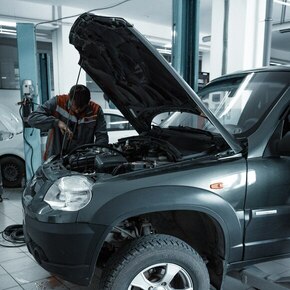
A well-maintained car is like a disciplined athlete; it performs better and lasts longer. However, keeping your vehicle in peak condition in today’s economy requires a dedicated budget for both labour and high-quality spare parts.
To avoid the 5 costly mistakes first-time car buyers make in Nigeria—like neglecting basic fluid management—you should plan for a full engine service every 5,000 to 7,500km
| Expense Category | Vehicle / Part Type | Estimated Cost (Naira) |
|---|---|---|
| Engine Oil Service | Standard 4-Cylinder Sedan | ₦35,000 – ₦55,000 |
| Engine Oil Service | V6 Engine SUV | ₦80,000 – ₦150,000 |
| Spare Parts | Oil Filter | ₦12,500 – ₦20,000 |
| Tyres & Suspension | Wheel Alignment & Balancing | ₦12,000 – ₦18,000 |
| Brake Pads | Sedan vs SUV | ₦25,000 – ₦90,000 |
| Battery | New Car Battery | ₦90,000 – ₦240,000 |
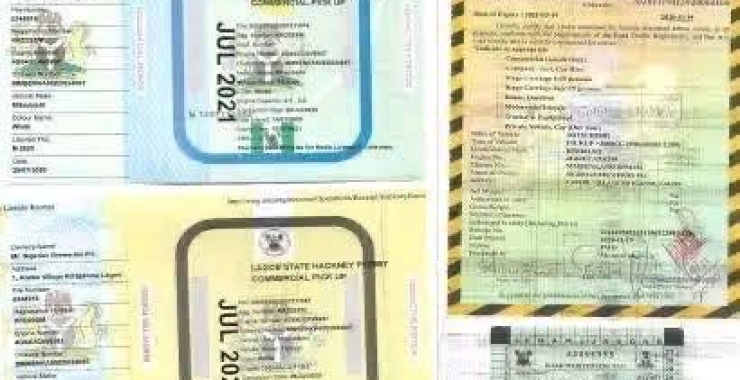
When people ask how much does it cost to maintain a car in Nigeria, they often forget the legal side. In 2026, increasing digital enforcement means keeping your vehicle paperwork updated is more important than ever. Before buying any used vehicle, it is also wise to learn how to verify car documents before buying in Nigeria to avoid future legal and ownership problems.
Toyota remains the “king of the budget” because parts are available in almost every local market like Ladipo or Apo. Brands like Kia and Hyundai are also very affordable, while European brands usually require a much larger budget for specialized parts.
A Nigerian-used car may cost less upfront, but hidden wear can increase maintenance costs. A good Tokunbo car often lasts longer.
Save between ₦20,000 to ₦40,000 monthly for unexpected repairs.
So, how much does it cost to maintain a car in Nigeria in 2026? For a standard, well-kept sedan, you should budget a total (fuel + service + papers) of roughly ₦1.4 million to ₦2.1 million per year. While this sounds like a lot, regular maintenance prevents the “mechanical heart attacks” that can cost millions of Naira to fix later.
Disclaimer: Actual yearly costs vary depending on driving frequency, fuel efficiency, local road conditions, traffic density, and vehicle age.