Quick Answer How Much Does It Cost to Maintain a Car in Nigeria? In 2026, the cost to maintain a car in Nigeria ranges from approximately ₦70,000 to ₦300,000+ monthly, depending on the vehicle ...

28May

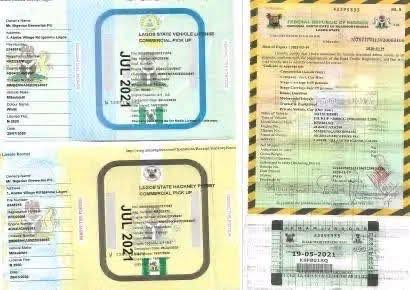
Knowing how to verify car documents before buying is the difference between securing a reliable vehicle and inheriting a legal problem in Nigeria’s automotive market. Both Tokunbo and Nigerian-used vehicles can look perfect externally while hiding serious documentation issues.
With agencies like the Federal Road Safety Corps (FRSC) and Nigeria Police Force (NPF) increasingly relying on digital verification systems, document checks are now essential protection against fraud and financial loss.
Before purchasing, also explore our guides on cheapest cars to maintain in Nigeria and best fuel-efficient cars for Nigerian roads. Then use this checklist to verify every document before committing.
Table of Contents
On-Site Verification Checklist
☐ Proof of Ownership verified
☐ Vehicle License checked
☐ Plate Allocation confirmed
☐ Roadworthiness Certificate validated
☐ CMRIS record checked
☐ Customs SGD verified (Tokunbo only)
☐ VIN matches all documents
☐ Insurance verified via NIID
Before you negotiate the final price, demand the original physical copies of the vehicle’s papers. If a seller tells you “the papers are at home” or “they are with my brother in Abuja,” walk away.
To master how to verify car documents before buying effectively, you must audit these six core pillars:
The POC is the DNA of the vehicle. It serves as the primary identity record and is issued through State Motor Vehicle Administration Agencies (MVAA). When checking papers, the most important step is to ensure that the name on the certificate matches the seller’s valid identification (Driver’s License or National Identification Number).
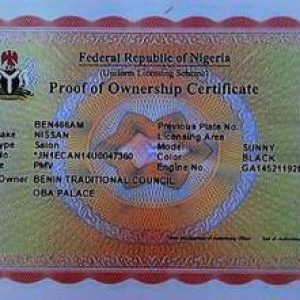
Any mismatch in ownership details should be treated as a serious red flag before proceeding with the purchase.
The Vehicle License proves the car is legally registered for road use. It is a yearly subscription to road usage; if it is expired, you are looking at a car that has been “off the grid,” which means back-taxes and penalties are waiting for you. Ensure it originates from a legitimate State Board of Internal Revenue.
Often overlooked, this form certifies that the specific license plate number attached to the car belongs to that exact chassis. Criminals frequently switch legitimate plates onto stolen cars of the same make and model, making this a vital step in vehicle document verification.
A car must be fit for the asphalt. This certificate confirms that the Vehicle Inspection Officer (VIO) has cleared the car’s mechanical health. In states like Lagos, Abuja, and several others, this now requires an automated test from centers like the Lagos Computerized Vehicle Inspection Service (LACVIS) or equivalent state-approved inspection centers.
The Nigeria Police Force utilizes the digitized Central Motor Registry Information System (CMRIS) to track stolen vehicles. A genuine, modern CMRIS certificate features an official Police crest and a unique QR code. This is an essential step when performing a car paper check to ensure the vehicle is not flagged in an active criminal investigation.
This is the single most critical document for any Tokunbo vehicle. If customs duty was skipped, the car is technically a smuggled item, and the Nigeria Customs Service has the legal right to impound it at any checkpoint—even years after you bought it. Look for the Single Goods Declaration (SGD) form, which must feature a unique C-Number, the specific Customs Command (such as Apapa or Tin Can Island), and the payment year.
This quick-reference table summarizes how to verify car papers in Nigeria by highlighting what to look for and the immediate warnings that mean you should question the deal.
| Document | Why It Matters | Red Flags |
|---|---|---|
| Proof of Ownership | Confirms legal ownership identity | Name mismatch with ID/NIN |
| Vehicle License | Legal road usage permission | Expired or unclear print |
| Plate Allocation | Links plate number to chassis | Not found in FRSC database |
| Roadworthiness | Safety inspection clearance | No valid inspection record |
| CMRIS | Police stolen-vehicle check | QR code missing or mismatch |
| Customs SGD | Proof of legal importation | Missing or invalid C-Number |
Learning how to verify car documents before buying also means knowing when to spot behavioral and physical inconsistencies. Do not ignore these warnings:
You do not need to be a forensic expert to spot counterfeit papers. You can perform an initial audit right from your smartphone using official digital portals and mobile shortcodes.
FRSC NVIS Check: Visit the National Vehicle Identification System (NVIS) portal and enter the registration number. This allows you to check if the database profile matches the physical car in front of you. If the portal says “Toyota Corolla” but you are standing in front of a “Honda Accord,” you have caught a fraudster in the act.
NPF CMRIS Verification: Use the Police CMRIS portal to verify the ownership history. This digital record is the ultimate proof that the car hasn’t been “cloned” or stolen.
Insurance Check: Insurance isn’t a suggestion; it’s a legal mandate. You can check the validity of the policy instantly by dialing *565*11# on any mobile network or by visiting the official AskNIID website. If the vehicle record does not appear in the Nigerian Insurance Industry Database (NIID), the paper policy is as useless as a chocolate teapot..
VREG Check: The Federal Ministry of Finance utilizes the Vehicle Registration System (VREG) portal to sync customs clearings. When checking Tokunbo car papers, look up the VIN on the VREG portal or via the VREG USSD service by dialing *7031#. A missing entry indicates an improperly cleared or smuggled vehicle.
The most sophisticated vehicle scam in Nigeria is document cloning—where authentic car documents in Nigeria from a scrapped car are used to mask a stolen vehicle of the same model and color. To prevent falling victim to this, always perform a physical double-check:
Step 1
Look at the base of the front windshield, the driver-side door B-pillar frame, and stamped directly onto the engine firewall.
Step 2
Every single alphanumeric digit must match exactly across the physical car structure, the POC, the Vehicle License, and the Customs SGD form. Scammers sometimes modify a “0” to look like an “O” or an “I” to look like a “1” using light engraving tools.
Step 3
For foreign-used Tokunbo cars, use services like Carfax or Autocheck before the car leaves the lot. This reveals the car’s history before it arrived in Nigeria—checking for flood damage, salvage titles, or mileage rollback.
Q1. Can I legally buy a car if the original papers are missing?
A. No. If the original Proof of Ownership or Vehicle License is missing, you should not hand over money. The seller must first present a valid Police Extract (Report) and a sworn Affidavit from a High Court explicitly stating the loss of the specific documents. Without these legal clearances, you are walking straight into a trap.
Q2. How do I check car documents if the vehicle is “Nigerian-used”?
A. For Nigerian-used vehicles, checking the current papers is not enough; you must verify the trail of ownership. Ensure the seller provides the original purchase receipts, a signed Letter of Transfer, and an official Change of Ownership certificate from the MVAA showing how the vehicle transitioned from the previous owner to the current seller
Q3. What happens if I get caught with fake car papers in Nigeria?
A. Under Nigerian law, ignorance is not a defense. If the FRSC or Police stop you with forged registration documents or a car flagged as stolen, the vehicle will be impounded immediately, and you can face arrest and prosecution for possession of stolen property or smuggling.
Mastering how to verify car documents before buying boils down to patience and precision. A seller who is honest will have no problem waiting ten minutes while you run the VIN through the FRSC, VREG, or Police portals.
Remember, a car without verified papers is just a heavy piece of metal that can land you in a cell. Protect your investment, trust the digital databases, and never let “shakara” rush you into a bad deal. Knowing exactly how to verify car documents before buying is your ultimate shield in the Nigerian automotive marketplace.